My grandmother owned and managed a quilting shop for many years in our quaint town, and I spent quite a bit of time there when I was younger. I was always drawn to the batiks she kept in stock – there was something about them that caught my eye, even from a young age.
I’ve included a few examples from Moda Fabrics, which is my grandma’s favorite fabric vendor!
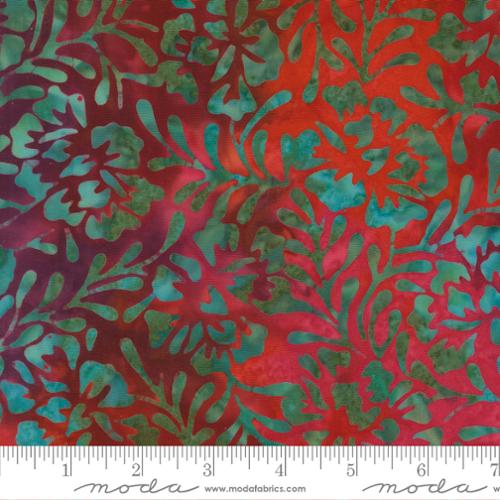
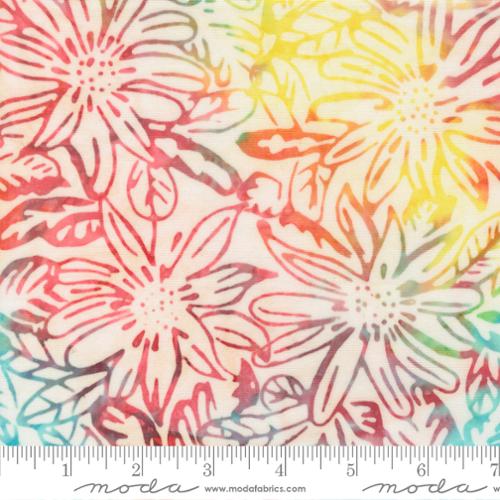
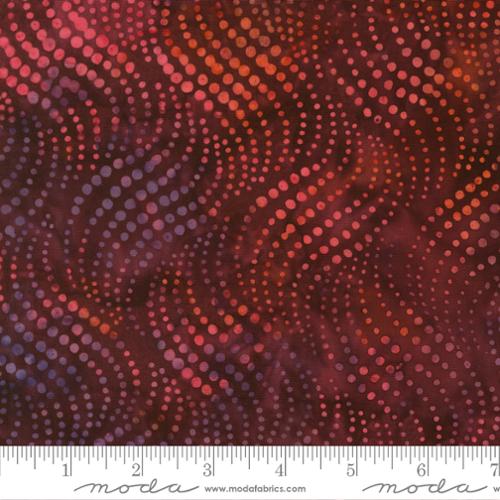
Similar to my previous research on the Damask weave, evidence seems to point to this print method also originating from Asia, several thousand years ago. Interestingly, there is a notion that it reached a certain popularity in several European countries – Holland, Germany, France, and the UK (2026). This piqued my interest and made sense as to why grandma stocked it so frequently – she was born in Poland, and it is likely that her mother might have had a liking for this print stemming from her Polish roots!
In researching the origins further, I found an article that goes into depth regarding how the process itself began. The oldest type of batik print is referred to as ‘batik tulis,’ – which implements hand writing or drawing with wax (Florek, 2018). The preparation in this style of printing begins with washing, kneading, and drying, and the fabric is further prepared with oil and a grain paste prior to the wax application. Several phases of design application are mentioned within this source: mencanting (using a tool called a canting to apply the wax), mewarna (the dyeing process), mengering (drying), memati warna (soaking in a color-fixing agent), membasuh dan membilas (washing), and finally, menyapu lilin (scraping of the wax and fabric boiled to further ensure wax is removed) (Florek, 2018).
As far as usage, batiks are often used in traditional, formal garments. According to the American Sewing Guild, batiks are often used in quilting due to the visual blending ability of the pattern. This source also maintains that the patterns created are often reminiscent of the tropics, which leads to a use within summer/resortwear, and outdoor and interior accents (2025).
References
American Sewing Guild. (2025, February 7). The Allure of Batik. American Sewing Guild. https://www.asg.org/the-allure-of-batik/
Florek, S. (2018, November 11). The batik process. The Australian Museum. https://australian.museum/learn/cultures/international-collection/balinese/the-batik-process/
The Batik Guild. (2026). The History of Batik. The Batik Guild. https://www.batikguild.org.uk/batik/history


Leave a Reply